We have all felt it: the "gut-punch" of bad news, or the "butterflies" in our stomach before a big presentation. For decades, we viewed these as mere metaphors. However, modern science has revealed that the connection between your digestive system and your mental state is far more than figurative.
This connection is known as the Gut-Brain Axis, and for the millions of people who start their day with a cup of joe, it is the most important biological relationship to understand. If you’ve ever wondered why your morning coffee occasionally leads to a "doom-scroll" of anxiety or a mid-day mood crash, the answer likely lies in your microbiome.
The Invisible Connection: Understanding the Gut-Brain Axis
The gut-brain axis is a bidirectional communication network that links the central nervous system (CNS) with the enteric nervous system (the "brain in your gut").
How Your Microbiome Dictates Your Mental State
Your gut is home to trillions of bacteria, known collectively as the microbiome. These microbes aren't just hitchhikers; they are chemical factories. They produce a significant portion of the body’s neurotransmitters. In fact, approximately 95% of your body's serotonin—the "feel-good" hormone—is produced in the gut, not the brain. When your microbiome is out of balance, your serotonin synthesis drops, leading to irritability, brain fog, and low mood.
The Vagus Nerve: The Information Superhighway
The primary physical link in this axis is the Vagus Nerve. This nerve acts like a high-speed fiber-optic cable, sending constant updates from your gut to your brain. If your gut is inflamed by a highly acidic diet (like traditional coffee), the Vagus Nerve sends "distress signals" to the brain, triggering a state of high alert that we perceive as anxiety.
Why Your "Morning Jitters" Might Start in Your Gut
Most people blame the caffeine in their coffee for the jitters. While caffeine is a stimulant, the source of that caffeine matters. Traditional coffee is highly acidic, which can irritate the gut lining and trigger the release of cortisol from the hypothalamic-pituitary-adrenal (HPA) axis. This "biological stress" signal tells your brain there is a threat, turning a simple morning ritual into a physiological fight-or-flight response.
The Dark Side of Traditional Coffee: Inflammation and Anxiety
While coffee contains beneficial polyphenols, it also presents challenges for those with sensitive "second brains."
How High Acidity Triggers Intestinal Permeability (Leaky Gut)
Standard coffee has a low pH, making it highly acidic. For many, this acidity can damage the delicate mucosal lining of the stomach, leading to increased intestinal permeability, or "Leaky Gut." When the gut leaks, undigested food particles and toxins enter the bloodstream, causing systemic inflammation. This inflammation can cross the blood-brain barrier, leading directly to neuroinflammation and mood disorders.
The Cortisol Spike and Mood Swings
Research suggests that high-dose caffeine consumption can double the level of epinephrine and cortisol in the blood. This spike is often followed by a "hypoglycemic-like" crash.
- The Spike: Hyper-focus, anxiety, racing thoughts.
- The Crash: Irritability, fatigue, "hangry" feelings.
Does Regular Coffee Kill Beneficial Gut Bacteria?
Over-consumption of highly acidic beverages can alter the microbiome diversity. A lack of diversity in gut bacteria is linked to a higher prevalence of psychological distress and a weakened immune response.
Beyond the Caffeine: How Psychobiotics and Mushrooms Support Mood
This is where mushroom coffee changes the game. By blending premium coffee with functional fungi, you transform a potential gut-irritant into a psychobiotic—a substance that supports the gut to improve mental health.
The Role of $GABA$ and Serotonin Synthesis
Certain functional mushrooms contain compounds that help modulate $GABA$ (Gamma-Aminobutyric Acid), the brain's primary "calming" neurotransmitter. When the gut environment is stable, the bacteria responsible for $GABA$ production can flourish, helping you remain "cool under pressure."
Chaga Mushrooms: The Gut Lining Repair Kit
Chaga is one of the world's most powerful antioxidants. In the gut-brain axis, Chaga acts as an anti-inflammatory agent. It helps "seal" the gut lining, preventing the systemic inflammation that leads to "brain fog."
Shiitake and Prebiotic Fibers
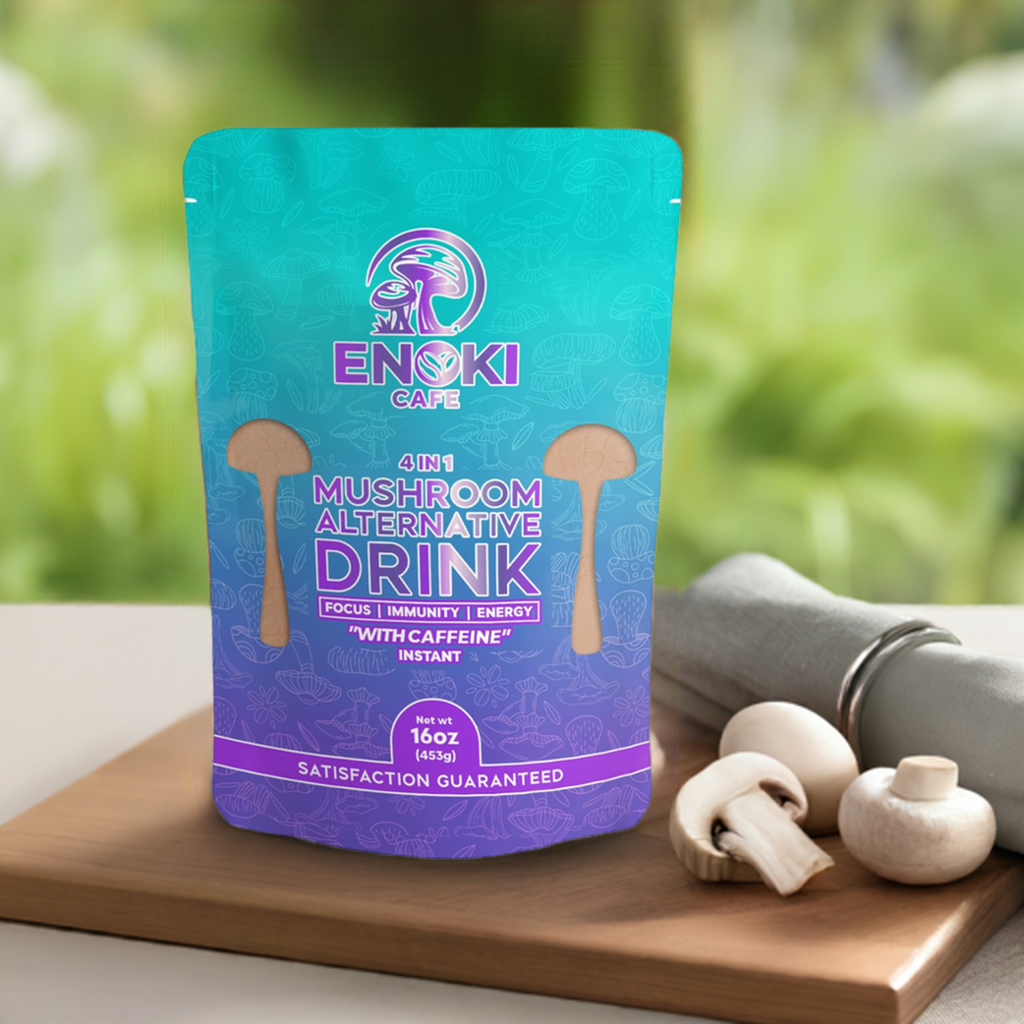
Shiitakes are rich in prebiotic fibers and beta-glucans. Unlike regular coffee, which provides no "food" for your bacteria, the mushroom extracts in Enoki Cafe act as a fertilizer for your healthy microbes, encouraging the growth of "good" bacteria that stabilize your mood.
Lion’s Mane and the Enteric Nervous System
Lion’s Mane is famous for stimulating Nerve Growth Factor (NGF). While we often focus on its impact on the brain, it also supports the nerves within the digestive tract, ensuring that the communication between your gut and brain remains clear and lag-free.
Switching to Mushroom Coffee: A Strategy for Emotional Balance
If you want to protect your mood, you have to protect your pH.
| Feature | Traditional Coffee | Enoki Cafe Mushroom Blend |
| pH Level | High Acid (4.8 - 5.1) | Low Acid / Balanced |
| HPA Axis Impact | High Cortisol Spike | Buffered / Sustained Energy |
| Microbiome Effect | Potential Irritant | Prebiotic Support |
| Primary Neurotransmitter | Adrenaline / Cortisol | Serotonin / $GABA$ Support |
Lowering Systemic Inflammation
By choosing an alkaline-forming coffee alternative, you reduce the inflammatory load on your body. This allows your Vagus Nerve to send "safety" signals to your brain rather than "danger" signals.
Managing the HPA Axis
Adaptogens like those found in the Enoki Cafe 4-in-1 Blend help regulate the HPA axis. Instead of a sharp spike and crash, you experience a "plateau" of focus. This stability is the key to avoiding the emotional volatility associated with caffeine addiction.
Choosing the Best Coffee for Gut-Brain Health
Not all mushroom coffees are created equal. To reap the benefits of the gut-brain axis, you must prioritize quality.
- 100% Fruiting Bodies: Many brands use mycelium (the root system) grown on rice. This adds unnecessary starch/grain to your diet, which can cause bloating. Enoki Cafe uses only the fruiting bodies, where the medicinal compounds are most concentrated.
- Dual-Extraction: To make mushroom nutrients bioavailable, they must be dual-extracted. This ensures the beta-glucans are accessible to your gut bacteria.
- Clean Sourcing: Mycotoxins (mold) in cheap coffee beans can wreak havoc on gut health. Ensure your coffee is third-party tested and clean.
Frequently Asked Questions
Q: Can changing my coffee brand really reduce my anxiety?
A: Yes. For many, "anxiety" is actually a physical reaction to gut irritation and cortisol spikes caused by high-acid coffee. Switching to a buffered, adaptogenic blend can significantly lower the physical triggers of anxiety.
Q: How long does it take for the gut-brain axis to reset?
A: You may feel a difference in digestion within 48 hours. However, the rebalancing of your microbiome and the stabilization of serotonin production typically takes 2 to 4 weeks of consistent dietary changes.
Q: Is mushroom coffee safe for people with IBS?
A: Generally, yes. Many people with IBS find mushroom coffee much easier to tolerate because it is less acidic and contains anti-inflammatory compounds like Chaga. However, always start with a small serving to see how your body reacts.
Q: What is the best mushroom for serotonin?
A: While no mushroom "contains" serotonin, Lion's Mane and Chaga support the gut environment and neural pathways necessary for your body to produce and process serotonin and $GABA$ efficiently.
Conclusion: Healing Your Mood One Cup at a Time
Your morning cup of coffee is the first chemical message you send to your brain every day. Is that message one of stress, acidity, and inflammation? Or is it one of balance, neuroprotection, and gut support?
By understanding the Gut-Brain Axis, you realize that mental health isn't just "in your head", it's in your mug. Making the switch to a functional, mushroom-infused blend is one of the simplest ways to support a stable mood and a resilient mind.