For many of us, the morning doesn’t truly begin until the first sip of coffee hits our tongue. That aromatic, bitter jolt is the engine of the modern workforce. However, for a growing number of "caffeine-sensitive" individuals, that morning ritual comes with a high price: bloating, acid reflux, and a nagging stomach ache.
If you’ve ever wondered why your beloved brew feels like battery acid in your stomach, you aren't alone. As a society, we are finally looking "under the hood" of our morning cup. It turns out that the very chemicals that give coffee its kick are the same ones disrupting your gastrointestinal tract.
The good news? You don't have to quit coffee. You just need to upgrade the chemistry. By infusing coffee with functional fungi, we can neutralize acidity and transform a gut-irritant into a gut-healer.
The Bitter Truth: Why Your Morning Coffee Causes Digestive Distress
Coffee is a complex chemical cocktail containing over 800 volatile compounds. While many are beneficial antioxidants, several act as aggressive triggers for a sensitive stomach.
Chlorogenic Acids and Gastric Acid Secretion: The Science of the "Stomach Ache"
The primary culprit is a group of compounds called chlorogenic acids. While these are technically antioxidants, they are also potent stimulators of gastric acid secretion. When you drink coffee, especially on an empty stomach, these acids signal your stomach to produce an excess of hydrochloric acid (HCl). This overproduction leads to that familiar "burning" sensation and can eventually irritate the delicate stomach lining.
How Caffeine Impacts the Lower Esophageal Sphincter and Acid Reflux
Caffeine is a systemic stimulant, but it has a specific effect on the lower esophageal sphincter (LES)—the muscular valve that keeps stomach acid where it belongs. Caffeine causes the LES to relax. When this valve doesn't close tightly, the hyper-acidic contents of your stomach can splash back up, leading to chronic acid reflux and heartburn.
The Role of Hyper-Acidity in Intestinal Permeability (Leaky Gut)
Chronic exposure to high-acid beverages can lead to neuroinflammation and a condition known as intestinal permeability, or "leaky gut." When the tight junctions of your gut wall are compromised, undigested food particles and toxins enter the bloodstream, triggering a systemic immune response. This is why "coffee bloat" often feels like it's affecting your whole body, not just your stomach.
Beyond the Bean: How Functional Mushrooms Balance Coffee’s pH
This is where the "fungi fix" comes in. Functional mushrooms aren't just for focus; they are powerful pH-balancing agents that can restore homeostasis to your morning cup.
Chaga Mushroom: The Alkaline Powerhouse for Gastrointestinal Homeostasis
Known as the "King of Medicinal Mushrooms," Chaga (Inonotus obliquus) is one of the most alkaline substances on earth. Chaga is incredibly rich in minerals like cesium, rubidium, and potassium. When blended with coffee, these minerals act as a natural buffer, neutralizing the chlorogenic acids and bringing the final brew closer to a neutral pH.
Neutralizing Acidity Without Sacrificing Flavor: The Chemistry of the Brew
Unlike adding baking soda to coffee (which ruins the taste), Chaga has a mild, earthy flavor that actually complements the dark notes of a roast. It reduces the "bite" of the acid while preserving the caffeine's effectiveness. This allows you to enjoy the energy without the gastric acid spike.
Polysaccharides and Beta-Glucans: Creating a Protective Shield
Beyond just fixing the pH, functional fungi like Chaga and Reishi are loaded with polysaccharides and beta-glucans. These long-chain carbohydrates act as a "mucilage," coating the stomach lining and providing a protective barrier against irritation. Clinical studies have shown that these compounds can help mitigate the inflammatory response in the gut.
Healing the Microbiome: Lion’s Mane and the Gut-Brain Connection
If Chaga is the shield, Lion’s Mane (Hericium erinaceus) is the healer.
How Hericium Erinaceus Supports the Enteric Nervous System
Your gut is often called the "second brain" because of the enteric nervous system. Lion's Mane is famous for stimulating Nerve Growth Factor (NGF), but research suggests this isn't limited to the brain in your head. It also supports the nerves in your gut, helping to regulate gut motility (the speed at which food moves through you).
Prebiotic Substrates: Feeding Beneficial Bacteria for Long-Term Health
Mushroom fibers are excellent prebiotic substrates. Unlike regular coffee, which can be harsh on your microbiome diversity, the fiber in functional mushrooms feeds the beneficial bacteria in your colon. This promotes the production of short-chain fatty acids, which are the primary fuel for a healthy gut wall.
Mushroom Coffee vs. Traditional Coffee: A Quantitative Comparison
| Feature | Traditional Coffee | Enoki Cafe Mushroom Coffee |
| Average pH Level | 4.85 – 5.10 (Acidic) | 6.0 – 6.5 (Near Neutral) |
| Impact on LES | Relaxes (Causes Reflux) | Buffered (Reduces Reflux) |
| Microbiome Impact | Potential Dysbiosis | Prebiotic Support |
| Energy Curve | Sharp Spike & Crash | Sustained "Clean" Energy |
| Stomach Sensation | Possible Burning/Cramping | Calm & Grounded |
How to Transition to a Gut-Safe Coffee Ritual
If your stomach is currently in a state of "coffee-induced protest," follow these steps to heal:
- Switch to 100% Fruiting Bodies: Many mushroom coffees use "mycelium on grain," which is just starch and won't help your pH. Ensure you use a 100% Fruiting Body Extract.
- Opt for Dual-Extraction: To get the gut-healing triterpenoids, the mushrooms must be dual-extracted (water and alcohol).
- Start with a Caffeine-Free Blend: If your gut is severely inflamed, start with a Caffeine-Free Mushroom Coffee Alternative. This allows the Chaga and Reishi to heal the stomach lining without any caffeine-related irritation.
- The "Stomach-First" Rule: Never drink coffee on an empty stomach. The fiber and fats in a small snack provide a "landing pad" for the acids.
Frequently Asked Questions (FAQ)
Q: Is mushroom coffee actually less acidic than regular coffee?
A: Yes. The high mineral content in functional mushrooms, particularly Chaga, acts as a natural alkaline buffer that raises the pH of the coffee, making it significantly easier on the digestive tract.
Q: Can I drink mushroom coffee if I have IBS or Gastritis?
A: Many people with sensitive digestive systems find mushroom coffee much more tolerable. However, because everyone's microbiome is different, we recommend starting with a half-serving of our low-acid blends to see how your system responds.
Q: Does caffeine in mushroom coffee still cause bloating?
A: For most, the bloating associated with coffee is caused by acid irritation, not the caffeine itself. By neutralizing the acid, mushroom coffee typically eliminates the "coffee bloat."
Q: How long does it take for functional fungi to heal the gut lining?
A: While the pH-balancing effects are immediate, the prebiotic and anti-inflammatory benefits usually take 2–4 weeks of consistent daily use to noticeably improve gut health.
Enjoying Your Caffeine Without the Digestive Consequences
You don't have to choose between mental clarity and digestive comfort. By understanding the science of gastric acid secretion and the alkaline power of functional fungi, you can enjoy your morning ritual without the afternoon antacids.
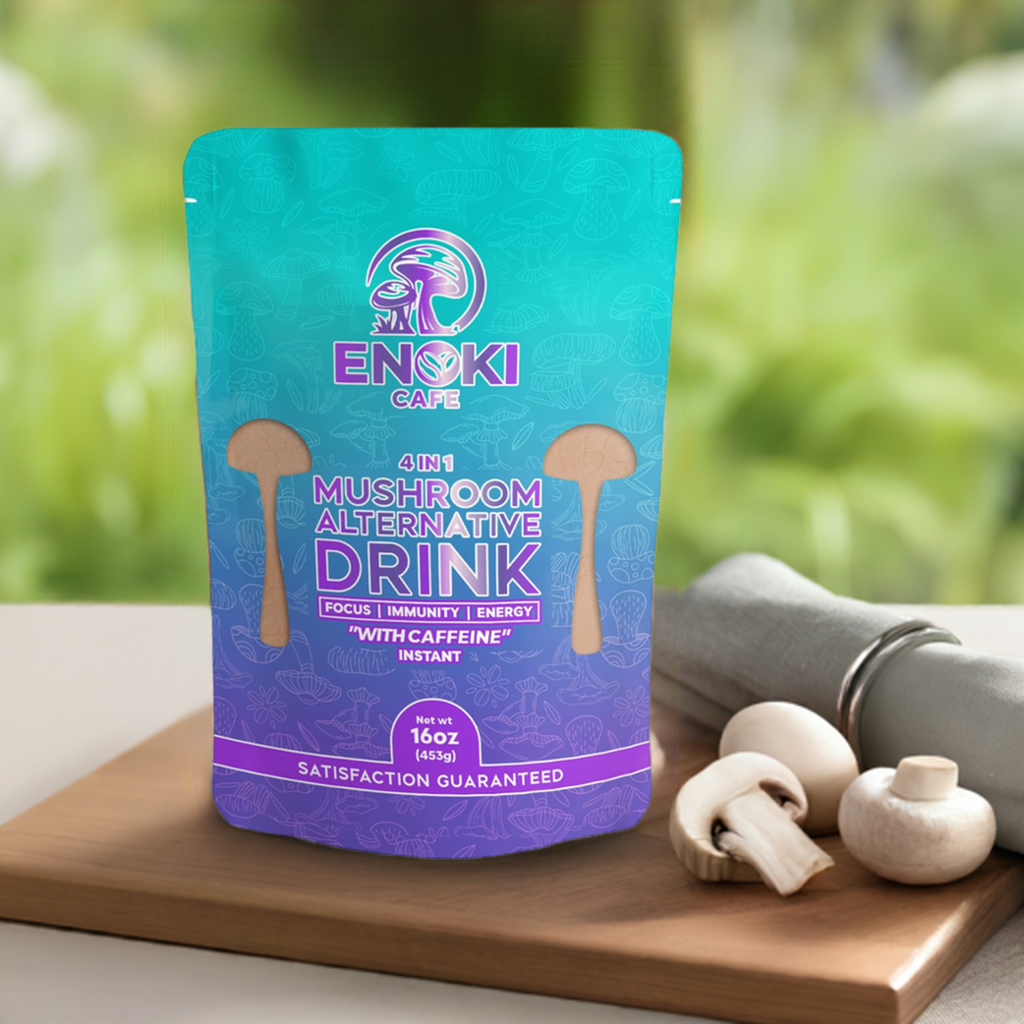
At Enoki Cafe, we believe that your coffee should support every part of your body—starting with your gut.
Ready to heal your gut?
Shop our Gut-Friendly Mushroom Coffee Blends and experience the difference of a pH-balanced brew.